
Village Life
Village Life in Ba Be
Ba Be is a place people live in, not only a view of water and stone. The ASEAN Centre for Biodiversity lists visits to local villages among visitor activities, beside boat tours and trekking. That sentence names an activity. It does not name a house, a host, or a right to enter.
The park’s own introduction records ethnic minority villages long settled around the lake, with customs of the Viet Bac region. The lake page stays with the water. This page stays with the households.
A lived-in landscape
The same introduction describes the park as a lake among rivers, streams and limestone mountains, with forest around the water. Settlement sits in that country. A field, a path and a house are part of how people live here. They are not a circuit laid out for visitors.
Walking past a settlement is still a walk. Looking across the water at a shore is still time on the lake. Neither one opens a door.
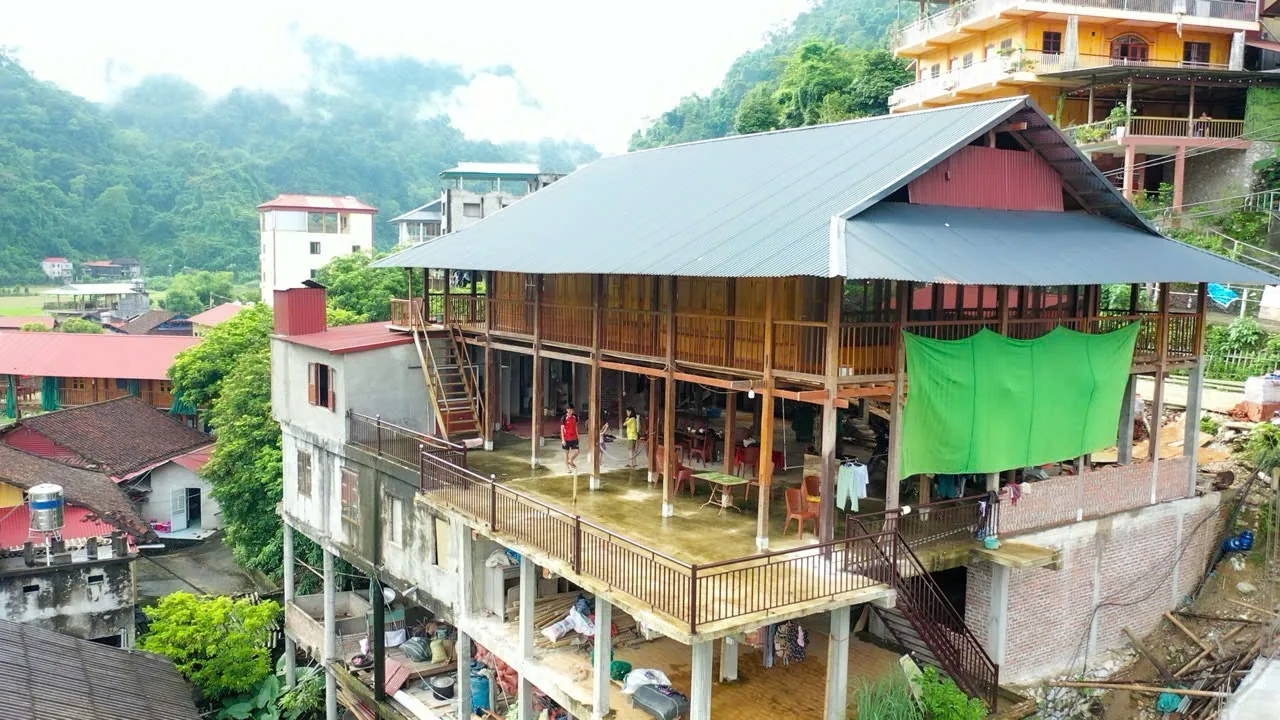
A guesthouse built into a hillside above the forest. The photograph is not identified as a named village or host.
Communities of Ba Be
The park introduction records four communities living in the park: Tay, Hmong, Dao and Kinh. A 13 May 2024 note from Vietnam’s Nature and Biodiversity Conservation Agency names Tay, Nung and Dao in connection with cultural life at the Ramsar site. The two lists are not the same sentence. This page does not join them into one map, and it does not assign an ethnicity to a village, a house or a person from either list alone.
The park introduction also records cultural life that continues: language, dress and traditional housing; Then and luon singing of the Tay; the khèn of the Hmong; and the Long Tong festival, which it places on the tenth day of the first lunar month in Nam Mau commune. Those are descriptions. They are not a performance a visitor is entitled to attend, and they are not an account of every household.
A village is not an attraction
A village is not an attraction. A path through a settlement is not an invitation into a house. A photograph of a person, a doorway or a meal is not automatic. The ASEAN sentence, and the park’s own visitor lines, say that people go to villages. They do not say a household is open.
The person who lives there decides who comes in, who eats, and who may take a picture. This page does not speak for them.
Staying local
A rural-tourism note from the Vietnam National Administration of Tourism describes homestay and farmstay stays in Nam Mau commune, around Ba Be. It names one community-tourism village, Pac Ngoi, in the core of the national park, and associates that village with Tay cultural life and old stilt houses. That is one account of one village. It is not a description of every settlement, and it is not a key to a house.
The same note describes a homestay as a community stay in which a visitor may share meals and daily life. That is a description of the form. It is not a promise that a family will host you. BABEWILD has not published a stay, names no host, and prints no price.
Walking through a lived landscape
The trekking page already says a path may pass fields or a settlement, and that this is not permission to enter a house. This page is the other side of that line. Walking stays with the forest. A household stays private.
Longer, slower travel
Staying longer is a way to be in a lived landscape, rather than to collect viewpoints in a day. The park introduction places community tourism beside ecotourism. Neither sentence is an itinerary.
BABEWILD has not published a longer journey. This page does not set a village, a night, a meal or a supplier.
Planning a respectful visit
Which place
Confirm which village is meant, and whether you are walking through it or staying in a house. This page names Pac Ngoi only as the tourism-authority note names it. It does not choose a village for you.
A household
A house is private space. Ask, on that day, whether you are invited in. A path, a pier or a listing is not that invitation.
Photographs
Ask before you photograph a person, a doorway, or the inside of a house. This page does not treat a public path as permission.
A stay
These pages do not say a room is available, what a meal includes, or whether a guide is part of the day. The household, or the person arranging the stay, is the one who knows.
BABEWILD is preparing time in this lived landscape for people who want this pace. It is not bookable from this page, and this guide does not set a village, a host, a price or a supplier.
Continue exploring
The national park page is the wider guide. The lake page stays with the water. The trekking page stays with walking. The caves page stays with the stone. The journal does not have published stories yet. Contact is open as a page; it is not a booking desk.
Sources
- ASEAN Centre for Biodiversity
Ba Be National Park, ASEAN Heritage Parks
- Ba Be National Park
Park introduction
- Nature and Biodiversity Conservation Agency
Ba Be Ramsar site, note dated 13 May 2024
- Vietnam National Administration of Tourism
Rural tourism note on homestay and farmstay in Ba Be