
Water
Ba Be Lake
Ba Be Lake is the water Ba Be National Park is named for. It lies in limestone country in northern Vietnam. The ASEAN Centre for Biodiversity describes it as Vietnam’s largest natural freshwater lake, at about 150 metres above sea level, and says the Tay name means “three lakes”: Pe Leng, Pe Lu and Pe Lam.
Vietnam’s Nature and Biodiversity Conservation Agency, in a note dated 24 April 2023, describes the same water as three interconnected lakes — Pe Lam, Pe Lu and Pe Leng — with a surface of up to 650 hectares, on limestone at more than 145 metres. An earlier protected-area sourcebook places the lake at 178 metres. This page does not choose one elevation.
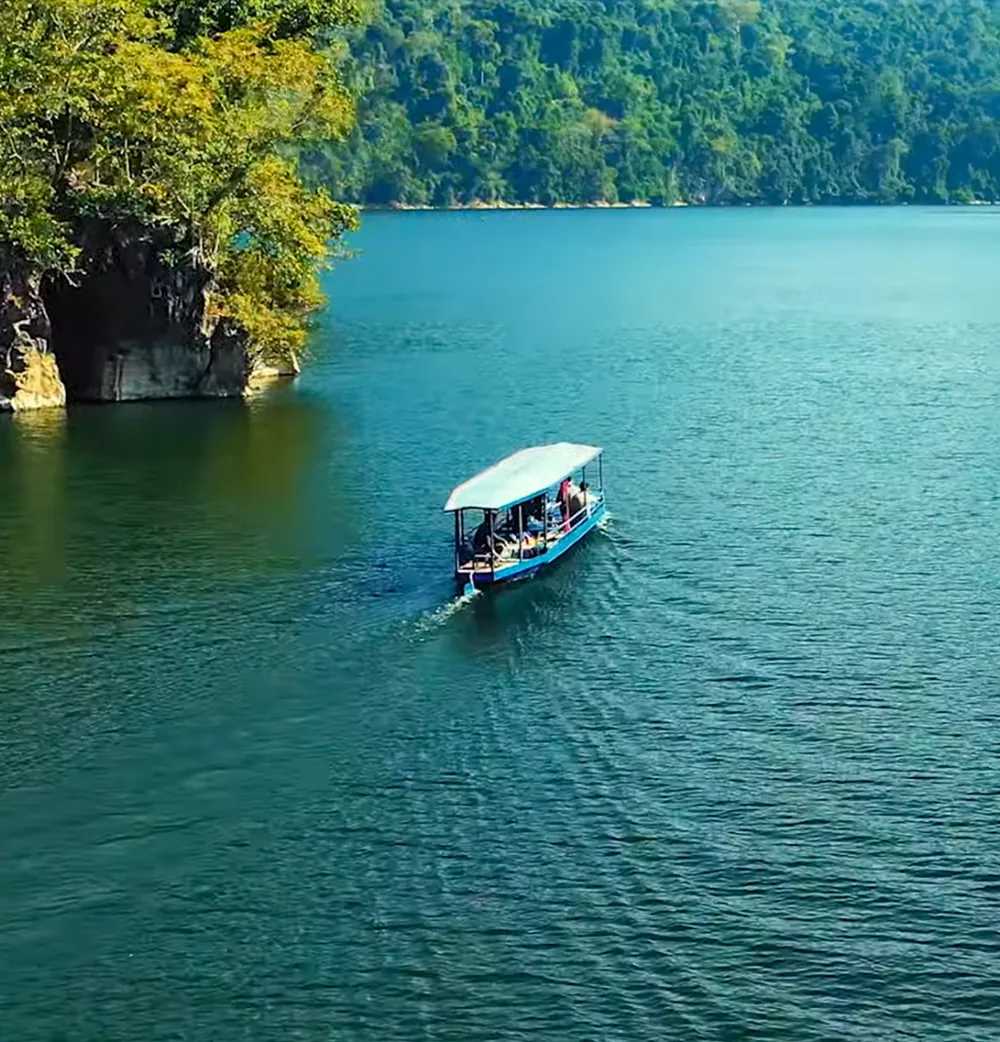
A boat on calm water between forested limestone. The photograph is not identified as a named landing or a named island.
The lake
The lake is the centre of the park, not a separate destination beside it. The Ramsar Sites Information Service describes the park as holding the only significant natural mountain lake in Vietnam, surrounded by karst, and important for water supply and for holding back floodwater. The Ramsar site is the wider wetland. The 650 hectares above are the agency’s figure for the lake surface, not for the whole park.
The protected-area sourcebook describes one continuous body of water, about 8 kilometres long and up to 800 metres wide, with small limestone islets. It names the Ta Han, Nam Cuong and Cho Leng rivers as feeding the lake from the south, and the Nang River as the outflow through the north of the park. Those lengths and river names are that account’s. They are not a new survey, and they do not settle the elevation disagreement above.
On the water
By boat
The ASEAN Centre for Biodiversity lists boat tours among visitor activities. A 13 May 2024 note from the same Vietnamese conservation agency also describes boating, and names Puong Cave and Hua Ma Cave among places visitors go. Which pier is in use, and what a ticket covers, are not stated on those pages. BABEWILD has not published a boat trip.
By paddle
A 6 May 2026 article on the Thai Nguyen provincial website describes kayaking as something visitors take part in, alongside walking and stays in lakeside houses. It does not say where a kayak is hired, which stretches are open, or what it costs. A provincial description is not a BABEWILD departure.
Water and limestone
Limestone is not a backdrop to the lake. The sourcebook describes a cave it spells Phuong, about 300 metres long, with the Nang River passing through it. Later conservation writing uses the name Puong Cave for a cave people visit by boat. This page treats those as the same named cave only so far as the names and the boat visit line up. It does not give a length you should rely on for an entrance, and it does not describe technical caving.
Looking into limestone from the water, or passing a cave mouth by boat, is a different outing from going further into a wet cave. Ask which caves are open to visitors, and what that entrance requires, on the day. The photograph on this page is a cave mouth seen from the water. It is not identified as Puong Cave or Hua Ma Cave.
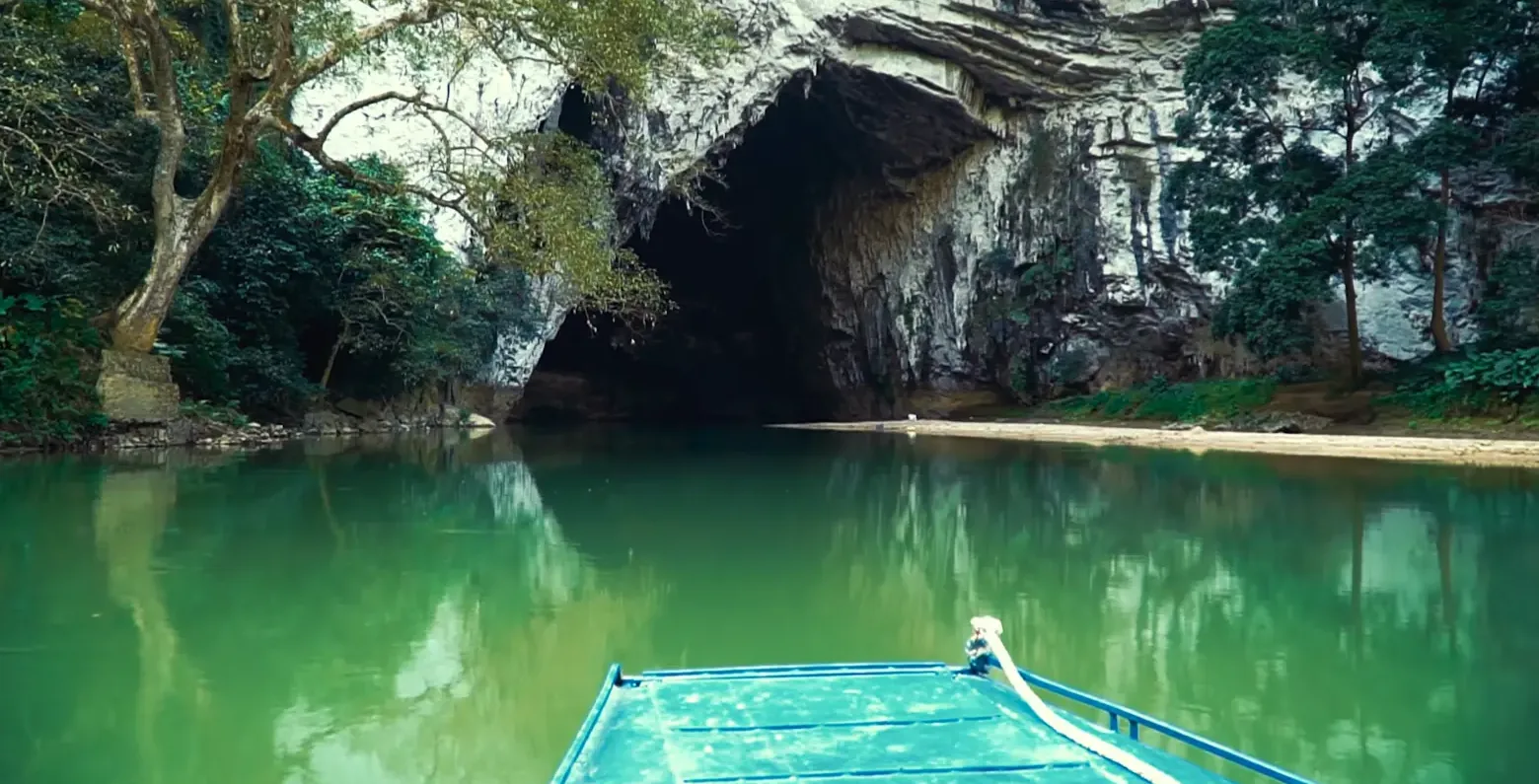
A cave mouth in limestone, seen from the water. Not identified as Puong Cave or Hua Ma Cave, and not a guide to entering one.
Caves and limestone in Ba Be →A different pace
A water day moves you across the lake and, on some accounts, onto the river that leaves it. A walking day moves you on paths through forest and among villages. They ask for different time. Neither is available on every day, and neither is a BABEWILD departure.
The lake, the forest and the caves sit close enough that one hurried circuit flattens them. Staying with the water for a day is a way to let the lake be the subject, rather than a transfer between other stops.
Practical planning
Which province
The ASEAN note and the 2023 agency page place the park in Bac Kan Province. The May 2026 Thai Nguyen article discusses the lake as part of Thai Nguyen. This page does not settle the current administrative name. Confirm it with whoever is arranging the road there.
Piers, tickets and craft
Boats and, where offered, kayaks are local arrangements. Published secondary reports disagree on fees, so this page prints no tariff, no capacity and no opening hours. The person operating the boat decides life jackets and whether to turn back.
Weather and the river
Rain changes the lake and the river. The May 2026 provincial article reports rubbish washing into the lake after floods. Water level, a landing, and whether a cave on the river is passable are conditions for that week, not a calendar this page can publish.
BABEWILD is preparing a water experience for people who want this pace. It is not bookable from this page, and this guide does not set a duration, a price or a supplier.
Continue exploring
The national park page is the wider guide. The journal does not have published stories yet. Contact is open as a page; it is not a booking desk.
Sources
- ASEAN Centre for Biodiversity
Ba Be National Park, ASEAN Heritage Parks
- Nature and Biodiversity Conservation Agency
Ba Be Lake Ramsar Site, note dated 24 April 2023
- Nature and Biodiversity Conservation Agency
Ba Be Ramsar site, note dated 13 May 2024
- Ramsar Sites Information Service
Ba Be National Park, site 1938
- Sourcebook of existing and proposed protected areas in Vietnam
Ba Be National Park chapter
- Thai Nguyen provincial website
Ba Be Lake article, 6 May 2026