
Caves & Limestone
Caves & Limestone in Ba Be
Limestone is part of Ba Be National Park, not a backdrop to the lake. The ASEAN Centre for Biodiversity describes the typical habitats as the freshwater lake, limestone, and lowland evergreen forest, and says visitors can trek through valleys, forests and caves. That sentence names an activity. It does not name a cave, a distance underground, or a rule about who may enter.
The Ramsar Sites Information Service describes the park as holding the only significant natural mountain lake in Vietnam, surrounded by a mountainous karst. The lake page stays with the water. This page stays with the stone.
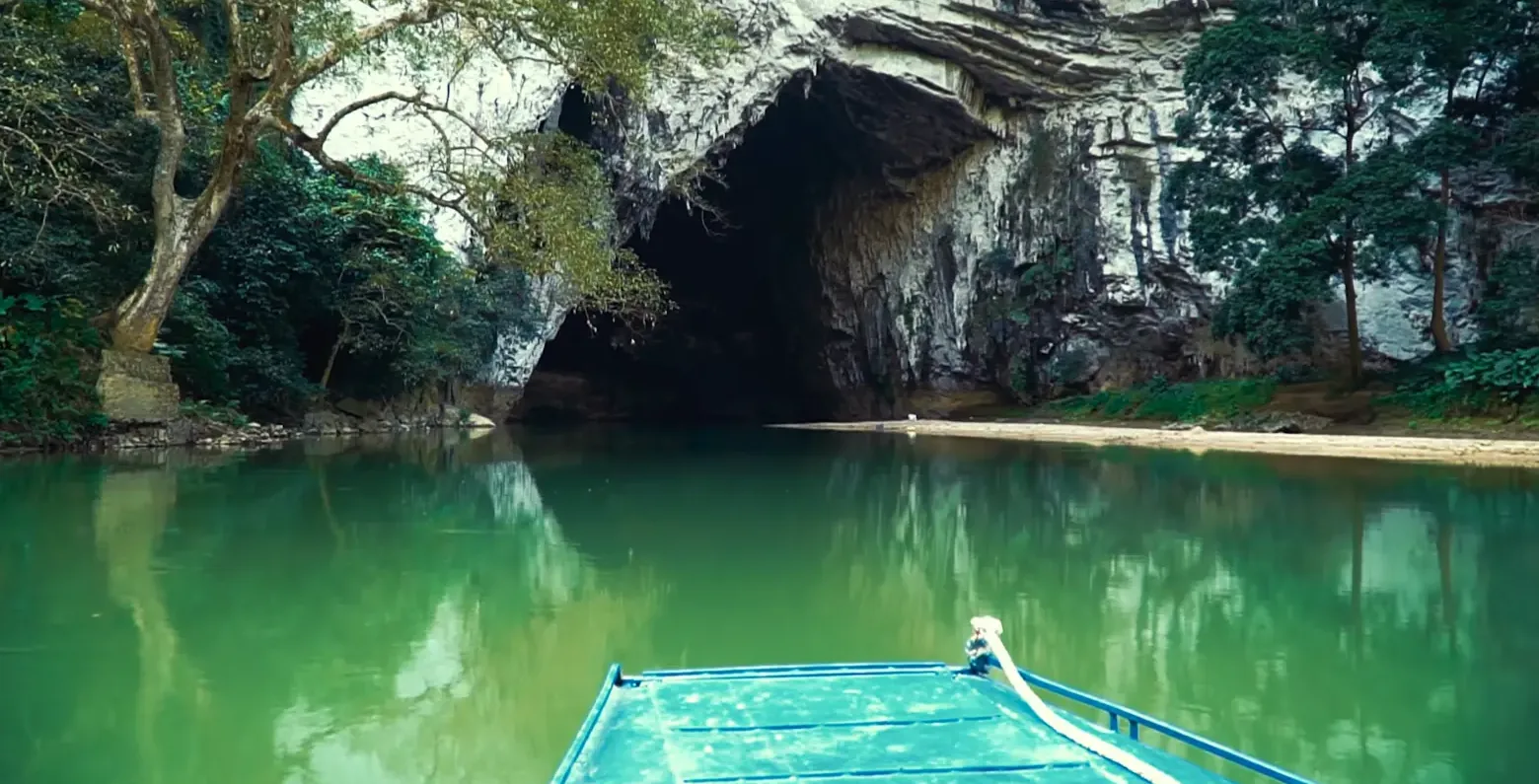
A cave mouth in a limestone cliff, seen from the water. The photograph is not identified as Puong Cave or Hua Ma Cave, and it is not a statement that the cave is open.
A limestone landscape
An English note from Vietnam’s Nature and Biodiversity Conservation Agency describes Ba Be as a flooded Ramsar site on limestone mountains, known for caves that include dry cave systems, water cave systems, and underground river systems. Those are kinds of cave. They are not a map, and they are not permission to go in.
Karst is limestone that water has shaped. A cliff, a cave mouth, and a passage that still holds a river are different faces of that stone. This page does not grade them, and it does not say which face is open on a given day.
Water through stone
Water and limestone meet in more than one way. The protected-area sourcebook describes a cave it spells Phuong, with the Nang River passing through it. A 13 May 2024 note from the same conservation agency names Puong Cave and Hua Ma Cave among caves visitors see, beside boating and trekking.
This page treats the sourcebook’s Phuong and the later name Puong as the same cave only so far as the spelling and a water-linked visit line up. It does not publish a length, and it does not describe a way through. The lake page is the account of the river and the boat.
Different kinds of cave
From the water
The 2024 agency note places a visit to caves beside boating. Looking into a cave mouth from the water, or stopping where a boat already goes, is that kind of time. It is not a description of the inside, and it is not a statement that the cave is open.
On foot, where visitors already go
The same note names Hua Ma Cave among caves visitors see. A cave that people walk into is a different outing from a look across the water. This page does not say how the approach is made, whether the cave is lit, or whether it is open.
A water cave
The English agency note names water caves and underground rivers as kinds of cave in this landscape. Going into one is not the same outing as a sightseeing stop. This page does not describe how that is done.
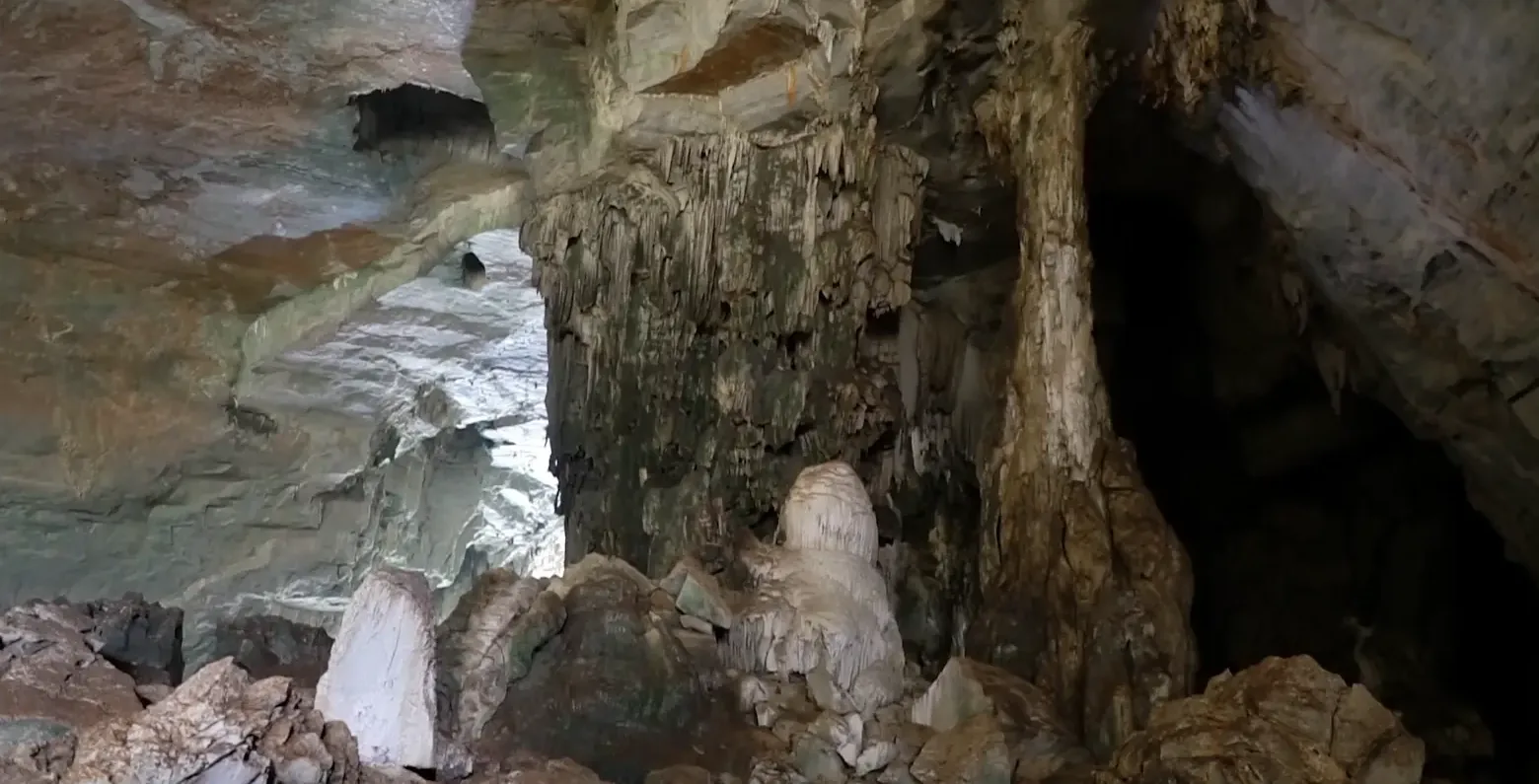
Limestone formations inside a cave. The photograph is not identified as a named cave, and it is not a guide to going further in.
Puong and the water
Puong Cave is a name the 13 May 2024 agency note uses for a cave visitors see. The older sourcebook uses the spelling Phuong for a cave the Nang River passes through. The two accounts are not the same sentence. This page does not join them into a measured passage, a mountain name, or a route you can follow.
A boat day that includes a cave is still a boat day. BABEWILD has not published one. Which landing is in use, and what a stop includes, are not stated on the pages used here.
Beyond sightseeing
A wet cave is not a longer version of a look from the boat. The agency’s own list of kinds — dry caves, water caves, underground rivers — is a description of the landscape. It is not an invitation to choose one and enter it.
This page prints no entrance fee. The sources listed here do not state a current charge, what it would cover, or which cave it belongs to. A fee, where one is asked on the day, is not permission to go further into a wet cave.
Nothing on this page says a visitor may enter a cave alone. Ask the person responsible for that cave, on that day, whether anyone is going in, and on what terms.
Planning a cave visit
Which cave
Confirm which cave is meant, and whether it is the one a boat stops at or a different one. This page names Puong and Hua Ma only as the 2024 agency note names them. It does not choose a cave for you.
Access and opening
The sources used here do not say which caves are open, which zone a visitor may enter, or what permission is required. Ask before you treat a cave as part of the day. Weather and the river can close a water-linked cave without a date this page can print.
A guide, or not
These pages do not say whether a guide is required. Do not treat a guide as optional, or as compulsory, from this page. The person operating the visit that day is the one who knows.
Equipment
This page does not list equipment. What a dry cave, a walk-in cave, or a water cave asks you to carry is a question for the operator, not a checklist published here.
BABEWILD is preparing time in this limestone country for people who want this pace. It is not bookable from this page, and this guide does not set a cave, a difficulty, a price or a supplier.
Continue exploring
The national park page is the wider guide. The lake page stays with the water. The trekking page stays with walking. The journal does not have published stories yet. Contact is open as a page; it is not a booking desk.
Sources
- ASEAN Centre for Biodiversity
Ba Be National Park, ASEAN Heritage Parks
- Ramsar Sites Information Service
Ba Be National Park, site 1938
- Nature and Biodiversity Conservation Agency
Ba Be Ramsar site, note dated 13 May 2024
- Nature and Biodiversity Conservation Agency
Natural wonders note, English page
- Sourcebook of existing and proposed protected areas in Vietnam
Ba Be National Park chapter